Are Florida Home Prices Going Down in 2026?

Jamie Rose Ward, Realtor • October 7, 2026

If you have been watching Florida real estate headlines, you may be wondering whether home prices are finally falling in 2026.

The short answer is: not across Florida as a whole.

According to Florida Realtors’ latest statewide housing report, the median sale price for an existing single-family home was $415,000 in August 2026, up 1.2% from August 2025. Condo and townhouse prices were also up year over year. At the same time, sales slowed slightly and the number of homes available for sale declined. Florida Realtors describes the current market as leveling off rather than taking a major turn downward.

That statewide picture is useful, but it does not tell you what is happening with every home, neighborhood, or price range.


Florida Is Not One Housing Market

Real estate conditions can vary significantly from one part of Florida to another.

A home in Hernando County may be competing in a very different market than a property in Hillsborough or Pinellas County. Even within the same county, conditions can change depending on the community, property type, price range, condition of the home, and available inventory.

That is why a statewide headline saying that Florida prices are “up” or “down” should never be the only information you use when deciding whether to buy or sell.

Florida Realtors makes the same distinction in its market reporting, noting that statewide numbers can differ from what is happening in individual communities and market segments.


What the 2026 Florida Housing Data Shows

August brought a slight slowdown in closed sales, but prices remained relatively steady.

Existing single-family home sales were down about 1.4% year over year, while the median single-family sale price increased to $415,000. Single-family inventory also declined approximately 13% compared with August 2025.

Those numbers do not point to a statewide housing crash.

Instead, they show a market in which buyers and sellers are continuing to adjust to current mortgage rates, affordability, inventory levels, and local conditions.

For buyers and sellers, that means the details of the individual property matter.


Why Some Homes May Still See Price Reductions

Even when statewide median prices are holding steady, individual homes can still be reduced in price.

A seller may need to adjust the asking price because of the home's condition, competing listings, changing buyer demand, or because the property was initially priced above what current buyers are willing to pay.

The opposite can also happen. A well-positioned property in an area with limited competing inventory may perform differently.

This is why the question is not simply, “Are Florida home prices going down?”

A more useful question is:

What are comparable homes doing in the specific area and price range I am considering?


What This Means for Florida Buyers

A more balanced market can give buyers room to slow down and evaluate the complete cost of a property.

Price is only one part of that calculation. Florida buyers should also consider homeowners insurance, potential flood insurance, property taxes, HOA or community fees, financing costs, roof age, inspections, and the condition of the home.

If you are considering a property, look at the recent comparable sales and current competition rather than assuming a statewide trend tells you whether that individual home is priced appropriately.

You can also review my Florida Buyer Resources for information about flood zones, insurance, inspections, closing costs, and other issues that can affect a Florida home purchase.


What This Means for Florida Sellers

For sellers, the current market makes accurate pricing especially important.

Pricing a home based only on what a neighbor sold for several years ago, an automated online estimate, or a statewide headline can create unrealistic expectations.

A useful pricing review should consider current comparable sales, competing homes, location, property condition, improvements, and what buyers are actually responding to in the local market.

If you are thinking about selling, my Home Value Review is personally prepared using current local information rather than relying only on an automated estimate.


Local Market Conditions Matter

I serve buyers and sellers across Hernando, Pasco, Citrus, Hillsborough, and Pinellas Counties, and those areas should not be treated as one identical real estate market.

The market for a home in Spring Hill can differ from Tampa, Clearwater, Brooksville, Wesley Chapel, or Crystal River. Property type and price range can create additional differences within those communities.

If you are deciding where to buy, you can explore the areas I serve on my Tampa Bay Communities page.


So, Are Florida Home Prices Going Down in 2026?

Statewide data does not show Florida home prices broadly falling in 2026.

The latest Florida Realtors report shows single-family median prices slightly higher than one year ago, even as sales slowed and inventory tightened. The larger story is a market that appears to be leveling rather than moving sharply in one direction.

But your decision should be based on more than a statewide number.

Whether you are buying or selling, the most useful information is the current data for the type of property, price range, and community involved in your decision.


If you are considering a move anywhere across my Tampa Bay and Gulf Coast service area, I’m available to help you understand the local market and what your options look like.

Ready to Make Your Next Move?

Whether you’re buying, selling, relocating, or simply figuring out what comes next, Jamie is available to talk through your options.

More Resources from Jamie Rose

Tampa Bay Real Estate Resources
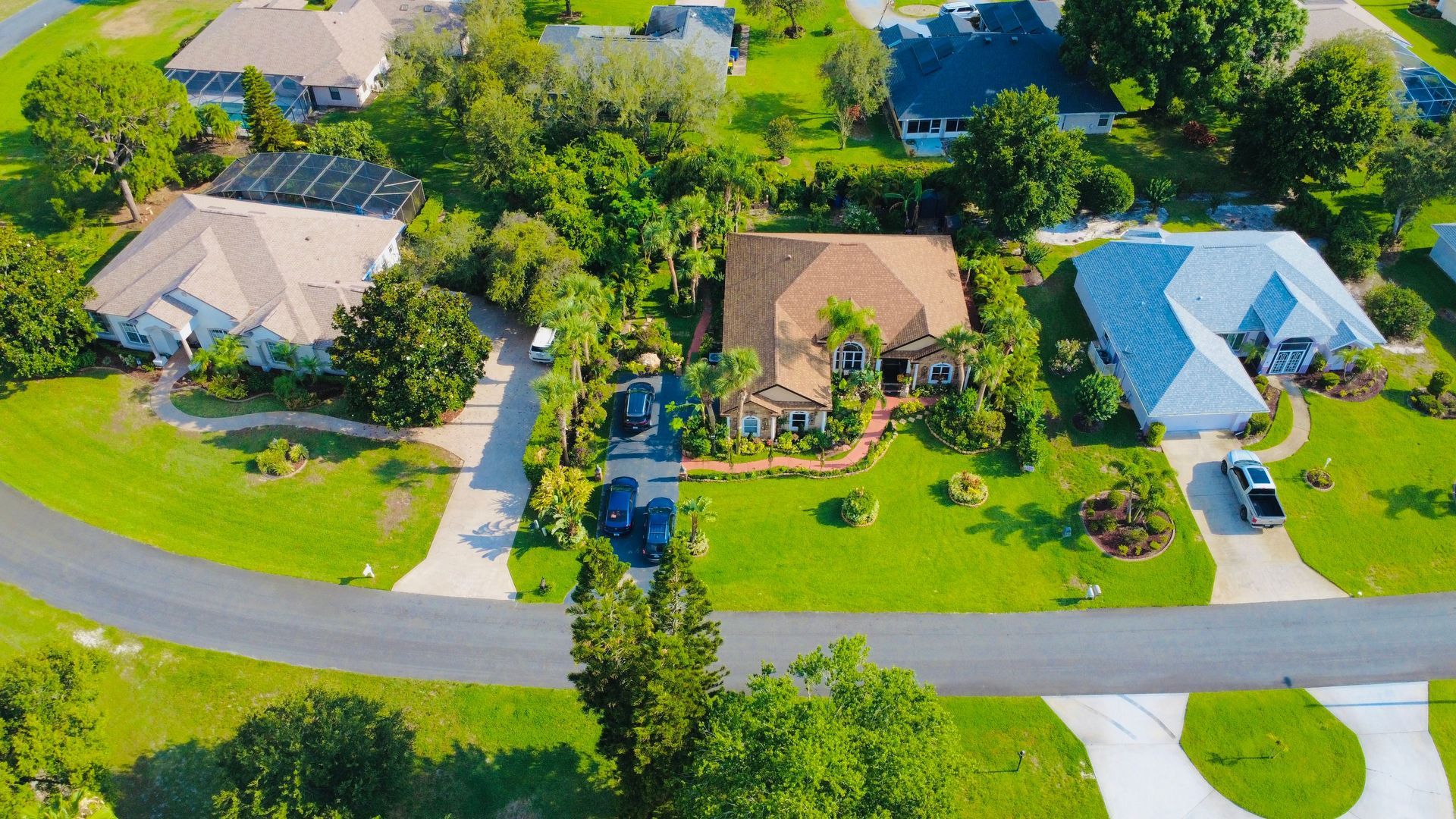
Aerial view of suburban homes with green lawns and a curved residential street.
By Jamie Rose Ward, Realtor • October 7, 2026
Florida homeowners insurance in 2026: what buyers and sellers should know about roof age, inspections, premiums, flood coverage and affordability.
White beachfront apartment building with palm trees and a parked car under a clear blue sky
By Jamie Rose Ward, Realtor • October 7, 2026
Should you buy or rent in Florida in 2026? Compare costs, flexibility, equity, insurance and other factors before deciding what fits your situation.
two hands holding keys to a new home
By Jamie Rose Ward, Realtor • October 7, 2026
Buying a home in Florida? Learn how preparation, inspections, financing, insurance and clear communication can help reduce surprises before closing.
House key, cash, and a floor plan with a white hard hat on a desk
By Jamie Rose Ward, Realtor • October 7, 2026
Learn how cash value life insurance may be used for real estate, including policy loans, down payments, risks, costs and questions to ask first.
Construction tools on a blueprint: drill, tape measure, level, nails, and wall anchors on a wooden table
By Jamie Rose Ward, Realtor • October 7, 2026
If you have built equity in your home, you may have heard about using a home equity line of credit, or HELOC, to access some of that value without selling the property. A HELOC can provide flexible access to borrowed funds, but it is still debt secured by your home. Before using one for renovations, another real estate goal, or a large expense, it is important to understand how the loan works, how payments can change, and what happens once the borrowing period ends. What Is a HELOC? A home equity line of credit is an open-ended line of credit secured by the equity in your home. Your home equity is generally the difference between the value of your home and what you still owe on mortgages or other loans secured by it. A lender determines how much, if any, of that equity it is willing to let you borrow against. Unlike a traditional home equity loan, which generally provides a lump sum, a HELOC allows you to borrow repeatedly up to an approved credit limit during a specified period. The Consumer Financial Protection Bureau's HELOC guide explains how these lines of credit work, including borrowing periods, repayment and the risk of using your home as collateral. How the Draw Period Works A HELOC normally begins with a draw period . During this stage, you can generally borrow from the available line of credit as needed, up to the lender's limit. As you repay borrowed amounts, some plans may make that credit available to use again. The exact length of the draw period depends on the lender and loan terms. The CFPB gives ten years as one example, but that is not a universal rule. Minimum payments during the draw period also vary. Some HELOCs may require payments based mainly on the outstanding balance, while others may have different requirements. Before opening one, ask the lender exactly how payments are calculated. What Happens When the Draw Period Ends? This is one of the most important parts of a HELOC to understand. When the draw period ends, you generally can no longer continue borrowing from the line and instead enter the repayment period . Payments may increase substantially because you are now repaying the balance under the terms of the loan. The Conusmer Financial Protection Bureau (CFPB) notes that repayment periods may extend for years, while some plans can require a much larger payment when the draw period ends. Ask the lender: How long is the draw period? How long is the repayment period? What will the minimum payment be during each phase? Could a large balance become due when the draw period ends? Can part of the balance be converted to a fixed rate? Do not assume that today's payment tells you what the HELOC will cost later. Most HELOC Rates Can Change HELOCs usually have variable interest rates. That means the interest rate, and therefore the payment, can change over time. Some lenders may allow part of the outstanding balance to be converted to a fixed rate, but the terms vary. When comparing HELOC offers, look beyond the advertised starting rate. Ask about: the annual percentage rate how and when the rate can change any rate caps minimum payments fees fixed-rate conversion options what happens at the end of the draw period My Mortgage & Financing Guide also explains home equity, escrow, PMI, pre-approval and other financing concepts to discuss with a lender. A HELOC Can Have Fees A HELOC is not necessarily free to open or maintain. Depending on the lender, fees may include application charges, appraisal or title costs, origination fees, annual fees, inactivity fees, early-cancellation charges or fees for converting part of the balance to a fixed interest rate. Compare the complete terms from more than one lender rather than focusing only on the interest rate. What Can Homeowners Use a HELOC For? HELOC proceeds can generally be used for a variety of purposes, depending on the lender's terms. Homeowners sometimes consider using them for: renovations or major home repairs large planned expenses consolidating other debt real estate-related expenses access to funds over a period of time rather than all at once But being able to borrow for something does not mean borrowing is automatically the right financial decision. For example, using home equity to pay unsecured debt replaces that debt with debt secured by your home. If you cannot repay the HELOC, the consequences can be much more serious. Remember That Your Home Secures the Loan This is the most important risk. A HELOC is secured by your home. If you cannot make the required payments, you could ultimately lose the property. The CFPB specifically advises homeowners to consider a HELOC only when they are confident they can keep up with the payments. There is also another limitation homeowners sometimes overlook. If the property's value falls significantly or the lender determines that your financial circumstances have changed, the lender may be able to reduce or freeze your ability to borrow additional funds under certain circumstances. So an unused HELOC should not automatically be treated as guaranteed future cash. Is HELOC Interest Tax Deductible? Sometimes, but not simply because the loan is secured by your home. The IRS states that interest on a home equity loan or HELOC may qualify as deductible home mortgage interest when the borrowed funds are used to buy, build, or substantially improve the home that secures the loan , subject to applicable requirements and limitations. Interest on money used for personal expenses, such as paying personal credit-card debt, generally does not qualify under that rule. You can review the IRS guidance on home equity interest for the current federal tax rules. Tax circumstances vary, so speak with a qualified tax professional about whether interest would be deductible in your situation. Know How Much Equity You Actually Have Homeowners often hear a market estimate and assume the difference between that number and their mortgage balance is immediately available to borrow. It does not work quite that simply. A lender determines the property's acceptable value, your available equity, the maximum amount it is willing to lend, and whether you qualify based on its underwriting requirements. If you are simply trying to understand what your home may currently be worth before deciding whether to sell, refinance, or explore your options, my Home Value Review provides a personally prepared local market review. My personal Home Value Review is a real estate market analysis, not a lender appraisal or determination of HELOC eligibility. HELOC or Home Equity Loan? These terms are sometimes used interchangeably, but they are different products. A home equity loan typically provides a specific amount as a lump sum. A HELOC provides a revolving line of credit that can generally be drawn from repeatedly during the borrowing period. Home equity loans may have fixed or adjustable rates, while HELOCs usually have adjustable rates. Which structure is appropriate depends on your borrowing needs, finances and the terms offered by the lender. The Bottom Line A HELOC can give a homeowner access to some of the equity built in a property without selling the home. But it should not be treated as a cash machine. It is a loan secured by your home. Interest rates and payments can change, fees may apply, access to additional credit is not always guaranteed, and repayment becomes especially important when the draw period ends. Before opening a HELOC, understand the complete terms and compare your options with a qualified lender. If tax consequences are part of your decision, consult a tax professional as well. I can help with the real estate side of the conversation, including understanding your local housing market and your property's position within it, while the appropriate lending and tax professionals can advise you on the financing itself.