Florida Homeowners Insurance in 2026: What Buyers and Sellers Need to Know

Jamie Rose Ward, Realtor • October 7, 2026

If you are buying or selling a home in Florida, homeowners insurance deserves attention early in the process.

Insurance can affect whether a property qualifies for coverage, how much it costs to own the home each month, and what information a buyer or insurer may need before closing. The details are property-specific, so broad statewide averages do not tell you what a particular home will cost to insure.

Here is what Florida buyers and sellers should know in 2026.


Why Homeowners Insurance Matters in a Florida Real Estate Transaction

When a buyer is financing a home, the lender will generally require homeowners insurance to protect the property. The insurance premium may also become part of the buyer's total monthly mortgage payment through an escrow account.

That means two homes with similar purchase prices can still have different total ownership costs.

Florida's Department of Financial Services explains that homeowners insurance rates can be affected by factors including the property's location, amount of coverage, construction type, age, mitigation features and other underwriting considerations. Insurers may also review systems such as the roof, plumbing, electrical wiring and heating and air conditioning.

For more detail about insurance, inspections and other Florida-specific buying considerations, see my Florida Buyer Resources page.


Roof Age Matters, but It Is Not the Whole Story

Roof condition can be important when a Florida home is being evaluated for insurance, but there is an important distinction between roof age and roof condition.

Under current Florida law, an insurer cannot refuse to issue or renew a homeowners policy solely because of roof age when the roof is less than 15 years old.

If the roof is at least 15 years old, the homeowner must be given an opportunity to have the roof inspected by an authorized inspector before the insurer requires replacement as a condition of issuing or renewing coverage. If that inspection shows at least five years of useful life remaining, the insurer cannot refuse coverage solely because of the roof's age. Other lawful underwriting requirements can still apply.

You can review the current Florida roof-age rule in the 2026 Florida Statutes: Homeowners Policies and Roof Age.

So rather than assuming that an older roof automatically makes a home uninsurable, buyers and sellers should obtain property-specific information.


Inspections May Affect Insurance Eligibility and Cost

An insurance company may request additional information about an older home before deciding whether to insure it.

A four-point inspection commonly looks at the roof, plumbing, electrical system, and heating and air conditioning. Florida DFS notes that insurers may request this type of inspection for older homes as part of underwriting.

A wind mitigation inspection serves a different purpose. It documents qualifying features designed to reduce wind damage, such as certain roof connections, coverings or opening protections. Those features may qualify a homeowner for premium credits, although the actual savings depend on the property and insurer.

The Florida Department of Financial Services provides a broader Homeowners Insurance Overview explaining underwriting, inspections, coverage and rating factors.


What Florida Buyers Should Do Before Closing

Do not wait until the end of the transaction to begin asking insurance questions.

Once you are seriously considering a property, find out the roof age and available documentation, ask whether prior inspections are available, and obtain a property-specific insurance quote early enough to understand the cost and any underwriting requirements.

The quote should reflect the actual property. Location, construction, age, coverage, mitigation features and insurer underwriting guidelines can all affect the final premium.

If you are financing the purchase, also look at the complete projected housing payment rather than principal and interest alone. Homeowners insurance and taxes can materially change the total monthly payment.

You can learn more about how insurance fits with the rest of your home financing on my Mortgage & Financing Guide.


What Florida Sellers Should Prepare

Sellers can make the insurance conversation easier by gathering accurate information about the property before questions arise.

If available, keep documentation showing the age of the roof and major systems, permitted improvements, wind-mitigation features, and recent inspections. Accurate records are more useful than assumptions about what an insurer will or will not accept.

This does not mean that a new roof or an updated home guarantees a particular premium or carrier. Insurance companies have their own underwriting guidelines, and the final premium is determined after the insurer reviews the property and application.

If you are preparing to sell and want to understand how your home's condition and recent improvements fit into its current market value, you can request my Home Value Review.


Do Not Confuse Homeowners Insurance With Flood Insurance

Flood insurance is a separate consideration.

Most homeowners insurance policies do not cover damage caused by flooding. Flood coverage may be purchased through a separate policy, and some private insurers may offer it as an endorsement.

A property's flood zone, lender requirements and the buyer's own risk tolerance should all be considered separately from the standard homeowners policy.

FloodSmart provides additional information about flood coverage and eligibility.

National Flood Insurance Program: Flood Insurance Basics

My Florida Buyer Resources page also explains flood zones and links directly to FEMA's Flood Map Service Center.


Insurance Is Part of the Total Cost of the Home

Purchase price alone does not tell you what a home will cost each month.

For buyers with mortgages, homeowners insurance is commonly included with taxes in the escrow portion of the monthly payment. If insurance premiums change, the total payment can change even when the principal and interest portion of a fixed-rate mortgage does not.

That is why insurance belongs in the affordability conversation before a buyer commits to a property, not after.


What Buyers and Sellers Should Take Away in 2026

Florida homeowners insurance is not one-size-fits-all.

Roof age matters, but Florida law provides specific protections against decisions based solely on roof age. Property condition, construction, location, mitigation features, coverage and insurer underwriting can also affect eligibility and price.

For buyers, the goal is to understand the insurance picture early enough to make an informed decision about the property and total monthly cost.

For sellers, having accurate property documentation available can make it easier for buyers and their insurance professionals to evaluate the home.


If you are buying or selling across Hernando, Pasco, Citrus, Hillsborough, or Pinellas County, I am available to help you understand where insurance considerations fit into the real estate process. For insurance coverage, premiums and eligibility, always confirm the details directly with a licensed insurance professional.

Ready to Make Your Next Move?

Whether you’re buying, selling, relocating, or simply figuring out what comes next, Jamie is available to talk through your options.

More Resources from Jamie Rose

Tampa Bay Real Estate Resources

Construction tools on a blueprint: drill, tape measure, level, nails, and wall anchors on a wooden table
By Jamie Rose Ward, Realtor • October 30, 2026
If you have built equity in your home, you may have heard about using a home equity line of credit, or HELOC, to access some of that value without selling the property. A HELOC can provide flexible access to borrowed funds, but it is still debt secured by your home. Before using one for renovations, another real estate goal, or a large expense, it is important to understand how the loan works, how payments can change, and what happens once the borrowing period ends. What Is a HELOC? A home equity line of credit is an open-ended line of credit secured by the equity in your home. Your home equity is generally the difference between the value of your home and what you still owe on mortgages or other loans secured by it. A lender determines how much, if any, of that equity it is willing to let you borrow against. Unlike a traditional home equity loan, which generally provides a lump sum, a HELOC allows you to borrow repeatedly up to an approved credit limit during a specified period. The Consumer Financial Protection Bureau's HELOC guide explains how these lines of credit work, including borrowing periods, repayment and the risk of using your home as collateral. How the Draw Period Works A HELOC normally begins with a draw period . During this stage, you can generally borrow from the available line of credit as needed, up to the lender's limit. As you repay borrowed amounts, some plans may make that credit available to use again. The exact length of the draw period depends on the lender and loan terms. The CFPB gives ten years as one example, but that is not a universal rule. Minimum payments during the draw period also vary. Some HELOCs may require payments based mainly on the outstanding balance, while others may have different requirements. Before opening one, ask the lender exactly how payments are calculated. What Happens When the Draw Period Ends? This is one of the most important parts of a HELOC to understand. When the draw period ends, you generally can no longer continue borrowing from the line and instead enter the repayment period . Payments may increase substantially because you are now repaying the balance under the terms of the loan. The Conusmer Financial Protection Bureau (CFPB) notes that repayment periods may extend for years, while some plans can require a much larger payment when the draw period ends. Ask the lender: How long is the draw period? How long is the repayment period? What will the minimum payment be during each phase? Could a large balance become due when the draw period ends? Can part of the balance be converted to a fixed rate? Do not assume that today's payment tells you what the HELOC will cost later. Most HELOC Rates Can Change HELOCs usually have variable interest rates. That means the interest rate, and therefore the payment, can change over time. Some lenders may allow part of the outstanding balance to be converted to a fixed rate, but the terms vary. When comparing HELOC offers, look beyond the advertised starting rate. Ask about: the annual percentage rate how and when the rate can change any rate caps minimum payments fees fixed-rate conversion options what happens at the end of the draw period My Mortgage & Financing Guide also explains home equity, escrow, PMI, pre-approval and other financing concepts to discuss with a lender. A HELOC Can Have Fees A HELOC is not necessarily free to open or maintain. Depending on the lender, fees may include application charges, appraisal or title costs, origination fees, annual fees, inactivity fees, early-cancellation charges or fees for converting part of the balance to a fixed interest rate. Compare the complete terms from more than one lender rather than focusing only on the interest rate. What Can Homeowners Use a HELOC For? HELOC proceeds can generally be used for a variety of purposes, depending on the lender's terms. Homeowners sometimes consider using them for: renovations or major home repairs large planned expenses consolidating other debt real estate-related expenses access to funds over a period of time rather than all at once But being able to borrow for something does not mean borrowing is automatically the right financial decision. For example, using home equity to pay unsecured debt replaces that debt with debt secured by your home. If you cannot repay the HELOC, the consequences can be much more serious. Remember That Your Home Secures the Loan This is the most important risk. A HELOC is secured by your home. If you cannot make the required payments, you could ultimately lose the property. The CFPB specifically advises homeowners to consider a HELOC only when they are confident they can keep up with the payments. There is also another limitation homeowners sometimes overlook. If the property's value falls significantly or the lender determines that your financial circumstances have changed, the lender may be able to reduce or freeze your ability to borrow additional funds under certain circumstances. So an unused HELOC should not automatically be treated as guaranteed future cash. Is HELOC Interest Tax Deductible? Sometimes, but not simply because the loan is secured by your home. The IRS states that interest on a home equity loan or HELOC may qualify as deductible home mortgage interest when the borrowed funds are used to buy, build, or substantially improve the home that secures the loan , subject to applicable requirements and limitations. Interest on money used for personal expenses, such as paying personal credit-card debt, generally does not qualify under that rule. You can review the IRS guidance on home equity interest for the current federal tax rules. Tax circumstances vary, so speak with a qualified tax professional about whether interest would be deductible in your situation. Know How Much Equity You Actually Have Homeowners often hear a market estimate and assume the difference between that number and their mortgage balance is immediately available to borrow. It does not work quite that simply. A lender determines the property's acceptable value, your available equity, the maximum amount it is willing to lend, and whether you qualify based on its underwriting requirements. If you are simply trying to understand what your home may currently be worth before deciding whether to sell, refinance, or explore your options, my Home Value Review provides a personally prepared local market review. My personal Home Value Review is a real estate market analysis, not a lender appraisal or determination of HELOC eligibility. HELOC or Home Equity Loan? These terms are sometimes used interchangeably, but they are different products. A home equity loan typically provides a specific amount as a lump sum. A HELOC provides a revolving line of credit that can generally be drawn from repeatedly during the borrowing period. Home equity loans may have fixed or adjustable rates, while HELOCs usually have adjustable rates. Which structure is appropriate depends on your borrowing needs, finances and the terms offered by the lender. The Bottom Line A HELOC can give a homeowner access to some of the equity built in a property without selling the home. But it should not be treated as a cash machine. It is a loan secured by your home. Interest rates and payments can change, fees may apply, access to additional credit is not always guaranteed, and repayment becomes especially important when the draw period ends. Before opening a HELOC, understand the complete terms and compare your options with a qualified lender. If tax consequences are part of your decision, consult a tax professional as well. I can help with the real estate side of the conversation, including understanding your local housing market and your property's position within it, while the appropriate lending and tax professionals can advise you on the financing itself.
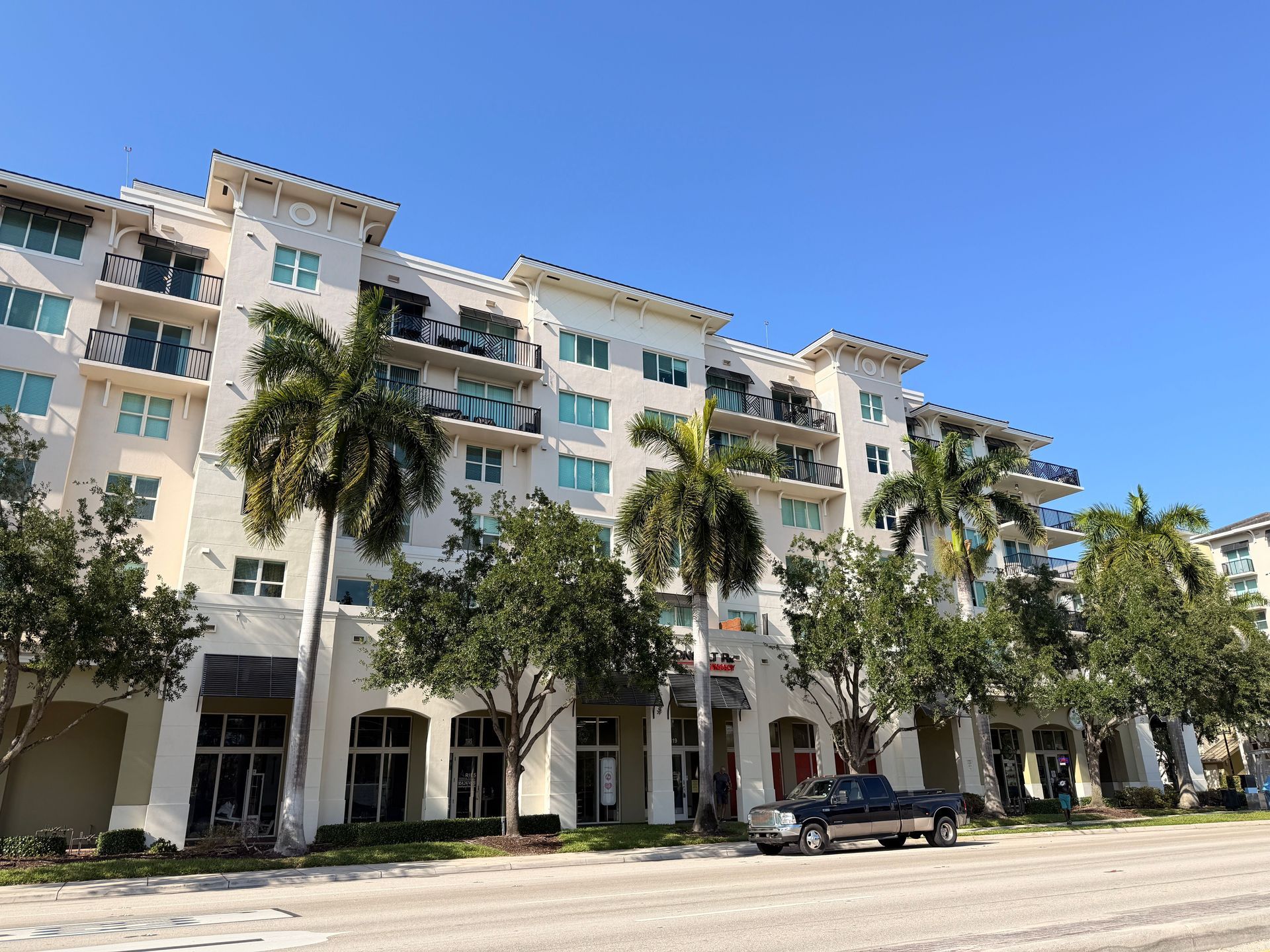
White beachfront apartment building with palm trees and a parked car under a clear blue sky
By Jamie Rose Ward, Realtor • October 7, 2026
Should you buy or rent in Florida in 2026? Compare costs, flexibility, equity, insurance and other factors before deciding what fits your situation.
Waterfront resort homes with palm trees, blue water, and a clear sky
By Jamie Rose Ward, Realtor • October 7, 2026
Are Florida home prices going down in 2026? See what current housing data means for buyers and sellers across Tampa Bay and Florida’s Gulf Coast.
House key, cash, and a floor plan with a white hard hat on a desk
By Jamie Rose Ward, Realtor • September 28, 2026
Learn how cash value life insurance may be used for real estate, including policy loans, down payments, risks, costs and questions to ask first.
two hands holding keys to a new home
By Jamie Rose Ward, Realtor • August 24, 2026
Buying a home in Florida? Learn how preparation, inspections, financing, insurance and clear communication can help reduce surprises before closing.